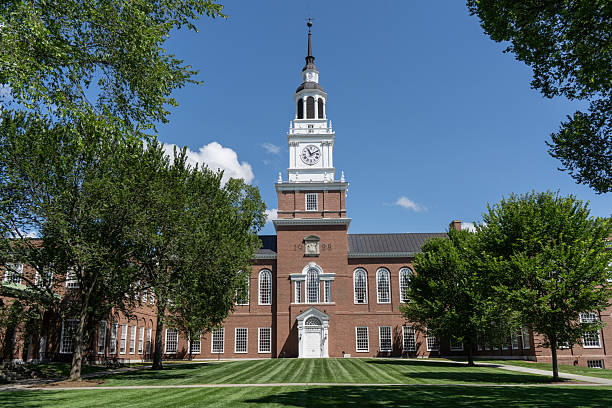
Dartmouth College Scholarships 2027–2028 offer international students an opportunity to pursue an undergraduate degree in the United States with financial assistance based on their family’s ability to pay. Located in Hanover, New Hampshire, Dartmouth provides need-based financial aid to eligible undergraduate students, including international applicants, and commits to meeting 100% of each admitted student’s demonstrated financial need.
Dartmouth’s financial aid programme is particularly relevant for students from countries such as Nigeria, Ghana, Kenya, India and other nations who have strong academic records but may not be able to afford the cost of studying at a leading American university.
Unlike scholarships that require students to compete for a fixed award based primarily on academic grades, Dartmouth’s undergraduate financial aid system assesses each family’s financial circumstances. Its need-blind admission policy also means that an international applicant’s ability to pay does not determine the admission decision.
Depending on the financial assessment, eligible students may receive substantial scholarship grants that contribute towards tuition, accommodation, meals, books, travel and other recognised educational expenses. Dartmouth does not require recipients to take out student loans to meet their demonstrated financial need, although students may be expected to contribute through employment or personal savings.
This guide explains the Dartmouth College scholarship system for the 2027–2028 academic year, including funding benefits, eligible programmes, admission requirements, financial aid documents, application procedures and deadlines.
Scholarship Summary
| Detail | Information |
|---|---|
| Scholarship name | Dartmouth College Need-Based Financial Aid |
| Host institution | Dartmouth College |
| Host country | United States of America |
| Location | Hanover, New Hampshire |
| Academic year | 2027–2028 |
| Study level | Undergraduate |
| Eligible applicants | Domestic and international students who qualify for admission and financial aid |
| Eligible nationalities | All nationalities |
| Scholarship type | Need-based institutional financial aid |
| Award value | Varies according to demonstrated financial need |
| Maximum financial need covered | 100% of demonstrated financial need |
| Tuition coverage | May cover the full tuition cost |
| Other eligible expenses | Housing, meals, books, supplies, personal expenses and travel allowances, subject to the aid assessment |
| Repayment | Scholarship grants do not need to be repaid |
| Admission policy | Need-blind for international applicants |
| Early Decision admission deadline | November 1, 2026 |
| Early Decision financial aid deadline | November 1, 2026 |
| Regular Decision admission deadline | January 1, 2027 |
| Regular Decision financial aid deadline | February 1, 2027 |
| Application route | Common Application and Dartmouth-specific requirements, plus a separate financial aid application |
| Official website | Dartmouth College Admissions |
Important: Dartmouth’s financial aid is not a fixed scholarship awarded automatically to every applicant. The amount depends on the institution’s assessment of the family’s financial circumstances, the cost of attendance and the expected family and student contributions.
About Dartmouth College Scholarships
Dartmouth College is a private Ivy League research university in Hanover, New Hampshire. Founded in 1769, the institution offers undergraduate education across a broad range of academic disciplines, alongside graduate and professional programmes.
Dartmouth is known for its undergraduate-focused academic environment, opportunities for faculty interaction, research, interdisciplinary study and international learning experiences. Its undergraduate programmes include the arts and humanities, engineering, social sciences, biological sciences, physical sciences and other fields.
The cost of attending a private American university can be a major obstacle for international students. Dartmouth addresses this through an institutional financial aid programme that evaluates students’ financial need rather than restricting assistance to a small number of merit scholarship winners.
How Dartmouth’s Scholarship Programme Works
Dartmouth’s undergraduate financial aid system has two separate components: admission and financial assistance.
First, the Admissions Office evaluates an applicant’s academic preparation, intellectual interests, extracurricular involvement, personal experiences and potential contribution to the college community.
Second, the Financial Aid Office assesses the family’s financial information to determine the amount the student and their family are expected to contribute.
Dartmouth adopted a need-blind admission policy for international applicants beginning with the Class of 2026. Under this policy, requesting financial aid does not reduce an international applicant’s chances of admission.
The college also commits to meeting 100% of demonstrated financial need for admitted undergraduates who qualify for and apply for aid. The assistance may include scholarships or grants and student employment.
Prospective applicants should understand that these policies do not guarantee admission. Students must still meet Dartmouth’s admission requirements and compete through its selective undergraduate admission process.
Is Dartmouth College Scholarship Fully Funded?
Dartmouth financial aid can provide funding equivalent to the full demonstrated financial need of an eligible student. For some international students, this can cover the entire assessed cost of attendance after the expected family and student contributions have been considered.
However, Dartmouth does not advertise a single guaranteed full scholarship amount for every international applicant. Each financial aid package is calculated individually.
Students should also distinguish between full demonstrated-need coverage and a promise to pay every personal expense without any contribution. Dartmouth’s aid packages may include an expected student contribution from employment, summer or leave-term earnings, or personal assets.
For an applicant whose family has very limited financial resources, the resulting award may be substantial. The official financial aid offer is the most reliable source for determining the actual amount of assistance available.
Financial Benefits and Coverage
Dartmouth calculates financial aid using its cost of attendance and its assessment of what a family can reasonably contribute. The cost of attendance includes direct university charges and estimated indirect expenses.
1. Tuition Fee Coverage
Tuition is one of the largest expenses associated with studying at Dartmouth.
Eligible students may receive scholarship grants that cover the full cost of tuition, depending on their demonstrated financial need. Dartmouth’s financial aid policies also provide particularly strong support for qualifying low- and middle-income families.
According to the college’s published guidance, families with annual incomes below $125,000 and typical assets can generally expect an aid package without an expected parent contribution. Families earning between $125,000 and $175,000 with typical assets can generally expect grants covering the full annual tuition cost.
These are general guidelines rather than automatic guarantees. The college considers assets and other financial circumstances, and students may still be expected to contribute towards some expenses.
2. Accommodation and Housing
Dartmouth includes housing in its undergraduate cost-of-attendance budget.
Eligible students can receive financial assistance that contributes towards the assessed cost of accommodation. The actual amount depends on the applicable academic year’s budget and the student’s financial aid package.
Students should consult the official Dartmouth Financial Aid website for the current cost estimates rather than assuming that a previous academic year’s housing allowance will remain unchanged.
3. Meals and Food Expenses
Food is another component of Dartmouth’s published cost of attendance.
The university includes an allowance for meals when calculating the overall cost of education. Students whose demonstrated need qualifies them for financial aid may receive assistance towards this expense as part of their package.
Actual spending can vary according to individual circumstances, so students should review their award and plan for any expenses beyond the university’s estimates.
4. Books and Academic Supplies
Students may need textbooks, laboratory materials, stationery, equipment and other learning resources during their studies.
Dartmouth includes estimated expenses for books, course materials, supplies and equipment in its cost-of-attendance calculation. These costs are considered when assessing a student’s demonstrated financial need.
The assistance is part of the overall financial aid package rather than a separate cash scholarship guaranteed to every applicant.
5. Travel Allowance
International students must consider the cost of travelling between their home countries and the United States.
Dartmouth includes travel expenses in its financial aid calculations and provides an allowance for travel to the United States. The amount may vary according to the student’s circumstances and distance from campus.
Applicants should check their financial aid offer to understand the travel allowance included in their package and whether additional travel expenses may need to be covered independently.
6. Grants That Do Not Need to Be Repaid
Dartmouth’s scholarships and grants are forms of gift assistance. They do not need to be repaid.
The college’s no-required-loan policy means that eligible undergraduates’ demonstrated financial need is met through scholarships or grants and student employment rather than a compulsory student loan.
Students and their families may choose to borrow money for other expenses or to finance their calculated contribution, but taking out a loan is not required to meet the demonstrated need covered by Dartmouth’s policy.
7. Student Employment and Personal Contributions
Although Dartmouth meets 100% of demonstrated need, a financial aid package may include an expected contribution from the student.
This contribution can come from personal savings, employment during the academic year or earnings during a summer or other leave term. For international students, Dartmouth’s published guidance includes an estimated annual income from academic-term employment.
Students should therefore avoid assuming that a full-need financial aid award means they will never need personal spending money. They should examine the student contribution and work expectations in their individual award.
8. Support for International Students
Dartmouth’s need-based financial aid is available to eligible international undergraduates, not just American citizens.
The college’s need-blind policy applies regardless of nationality, and its commitment to meeting demonstrated need extends to admitted international students who apply for financial assistance.
This makes Dartmouth a potential option for international students whose academic preparation is strong but whose families cannot reasonably afford the full cost of attendance.
9. Financial Aid for Families With Different Income Levels
Dartmouth does not impose a single household-income ceiling above which no student can receive need-based financial aid.
Its published guidance indicates that families earning below $125,000 annually, with typical assets, can generally expect no parent contribution. Families earning between $125,000 and $175,000, with typical assets, can generally expect full tuition coverage through grants.
Families with higher incomes may still qualify for assistance because the assessment considers the overall financial circumstances, not income alone.
10. Renewal Throughout the Undergraduate Degree
Dartmouth’s financial aid support can continue throughout an eligible student’s undergraduate education, but students must reapply annually.
The Financial Aid Office reassesses financial circumstances and the relevant cost of attendance each year. An award may therefore change as family income, assets, student contributions or university costs change.
Students should complete the required renewal application and supporting documentation by the deadlines provided by Dartmouth.
Eligible Programs and Courses
Dartmouth’s need-based undergraduate financial aid is available to eligible students admitted to the college’s undergraduate degree programmes. Students do not generally apply for a separate scholarship tied to each major.
Academic options span several disciplines, including:
- Computer science
- Engineering sciences
- Biological sciences
- Chemistry
- Physics and astronomy
- Mathematics
- Earth sciences
- Environmental studies
- Economics
- Government and political science
- Psychology
- Sociology
- Anthropology
- History
- English and creative writing
- Philosophy
- Linguistics
- Film and media studies
- Art history and studio art
- Music
- Geography
- Neuroscience
- Quantitative social science
This list is illustrative rather than exhaustive. Applicants should consult Dartmouth’s official academic programme listings to confirm available majors, interdisciplinary pathways and degree requirements.
Students interested in biotechnology, computational biology, public health, artificial intelligence or biomedical research may find relevant academic opportunities across different departments. They should investigate the courses, faculty interests and undergraduate research options that align with their goals.
Important: This guide focuses on undergraduate financial aid. Dartmouth’s graduate and professional schools have different funding arrangements. Graduate fellowships, teaching assistantships, research assistantships and programme-specific awards should not be assumed to follow the same rules as undergraduate scholarships.
Eligibility Requirements
Dartmouth does not use one examination or grade threshold that automatically qualifies an applicant for a scholarship. Students must qualify for undergraduate admission and provide the financial information required for need-based aid.
1. Applicants From All Nationalities Can Apply
Dartmouth accepts undergraduate applications from students around the world. International applicants, including students from Nigeria, Ghana, Kenya, India, Pakistan and other countries, may apply for need-based financial aid.
The university’s need-blind policy means that an international student’s ability to pay is not considered in the admission decision.
2. Apply for an Eligible Undergraduate Degree
Applicants should determine whether they qualify as first-year or transfer applicants.
First-year applicants generally apply while completing secondary school or after finishing school without having matriculated at another degree-granting institution. Students who have already enrolled in college or university may need to apply through Dartmouth’s transfer admission process.
Dartmouth’s transfer eligibility rules differ from those for first-year admission. Applicants should review the relevant official guidance before selecting their application route.
3. Demonstrate Strong Academic Preparation
Dartmouth reviews applicants’ academic records, course choices, school context and achievements.
There is no single GPA that guarantees admission. Students should demonstrate that they have made the most of the educational opportunities available to them and are prepared for rigorous undergraduate study.
Strong academic performance is important, but admission is not based on grades alone. Intellectual curiosity, personal qualities, activities and contributions to the community may also inform the decision.
4. Meet Standardised Testing Requirements
Applicants must follow Dartmouth’s testing policy for their admission cycle.
Dartmouth’s published requirements include standardised testing, with additional options for students attending secondary schools outside the United States. Depending on the applicable policy, students educated internationally may be able to submit SAT or ACT scores or qualifying alternative examination results, such as recognised national or international school-leaving examinations.
Because testing rules can change, international applicants should verify the requirements on Dartmouth’s official admissions website before registering for examinations or submitting an application.
5. Meet English Language Requirements Where Applicable
Applicants whose first language is not English may need to submit an English proficiency examination result.
Dartmouth’s published guidance states that an English proficiency examination is required when the applicant’s curriculum has not been delivered in English for at least two years, subject to the university’s current rules and accepted examinations.
Students should review the latest requirements to determine which tests are accepted and whether their educational background qualifies for an exemption.
6. Demonstrate Financial Need
Students requesting need-based aid must submit accurate financial information about their families.
Dartmouth considers the cost of attendance, parental financial circumstances, assets and expected contributions when determining the amount of assistance required.
There is no universal household-income cutoff for scholarship consideration. Applicants should not assume they are ineligible based on income alone.
7. Submit a Complete Financial Aid Application
International applicants seeking financial aid must complete the CSS Profile or, when the application fee creates serious financial hardship, Dartmouth’s accepted alternative International Student Financial Aid Application (ISFAA).
The ISFAA is submitted directly to Dartmouth’s Financial Aid Office according to the university’s instructions. Dartmouth states that using the ISFAA instead of the CSS Profile does not change an applicant’s eligibility for aid.
Applicants must also provide the required parental income documentation and any additional records requested by the university.
8. Meet Admission and Financial Aid Deadlines
Applicants must submit their admission application and financial aid documents within the relevant deadlines.
For fall 2027 entry, Dartmouth lists November 1, 2026, as the Early Decision deadline and January 1, 2027, as the Regular Decision deadline. The financial aid deadlines are November 1, 2026, for Early Decision and February 1, 2027, for Regular Decision.
Applicants should check the official website for any updates before submitting their applications.
Required Documents
Dartmouth’s admission and financial aid processes require different sets of documents. The exact financial documentation depends on the applicant’s circumstances and the requirements applicable to their admission round.
Admission Documents
Common Application: First-year applicants must complete the Common Application and Dartmouth’s required writing supplement.
Academic transcripts: Applicants must provide their secondary school records through the required school reporting process.
Secondary School Report and school profile: Dartmouth requires school information and a counselor evaluation as part of its admission process.
Teacher recommendations: First-year applicants must submit two teacher evaluations in accordance with Dartmouth’s instructions.
Standardised test results: Applicants must provide the SAT, ACT or another qualifying examination result where permitted under the applicable testing policy.
English proficiency results: Applicants who are required to demonstrate English proficiency should submit an accepted test result.
Application fee or fee waiver: Applicants must address the application fee requirement or obtain an eligible fee waiver.
Dartmouth Writing Supplement: The university requires additional written responses through its application process.
Optional supporting materials: A peer recommendation is recommended, while an art portfolio may be submitted by applicants for whom it is relevant and permitted. These are not mandatory for every applicant.
Financial Aid Documents
CSS Profile or ISFAA: International applicants requesting aid must complete the CSS Profile or use Dartmouth’s accepted ISFAA alternative when eligible.
Parents’ income tax statements: International applicants must submit signed copies of all pages of their parents’ 2025 income tax statements for the 2027–2028 aid cycle, following Dartmouth’s published instructions.
Income documentation for non-filers: Families whose parents do not file tax returns should follow Dartmouth’s instructions for providing alternative income documentation.
Additional financial records: Dartmouth may request supporting information to clarify income, assets or other elements of the family’s financial circumstances.
English translations: Financial documents must meet Dartmouth’s language requirements. The college’s published guidance allows applicants to translate documents themselves where instructed. Applicants should follow the current rules carefully.
If parents file separately, Dartmouth requests a copy of each parent’s tax return. Students with separated parents or unusual family circumstances should review the college’s guidance on noncustodial parent information and any applicable waiver procedures.
Applicants should not assume that every document listed above is required in every case. The official application instructions and any requests from the Financial Aid Office determine the final requirements.
How to Apply
Applying for Dartmouth College Scholarships 2027–2028 requires an application for undergraduate admission and a separate application for financial aid.
Step 1: Review Dartmouth’s Official Requirements
Visit the Dartmouth College Admissions website and review the requirements for international applicants.
Confirm your intended degree level, application category, testing requirements and relevant deadlines before beginning.
Step 2: Choose Your Admission Round
Dartmouth offers Early Decision and Regular Decision for first-year applicants.
Early Decision is binding. Students who apply through this route agree to attend Dartmouth if admitted, subject to the college’s stated conditions. It is therefore most appropriate for applicants who have made Dartmouth their clear first choice and understand the implications of the commitment.
Regular Decision is non-binding and gives applicants more flexibility to compare offers from different universities.
Both routes provide access to Dartmouth’s need-based financial aid programme.
Step 3: Complete the Common Application
Create an account on the Common Application platform and add Dartmouth College to your list of institutions.
Complete the required personal information, academic history, activities and written responses. Check every section carefully before submitting.
Step 4: Prepare Your Supporting Admission Documents
Arrange for your school to submit the required transcript, school report and counselor evaluation.
Ask two appropriate teachers to complete the required recommendations. Give them enough time to prepare meaningful evaluations.
Check Dartmouth’s current testing and English proficiency policies, then arrange for the required results to be submitted through the approved process.
Step 5: Submit the Dartmouth Writing Supplement
Complete the Dartmouth-specific writing supplement and any other required application components.
Use the responses to communicate your interests, experiences and reasons for applying. Answer each question directly and ensure that your writing reflects your own experiences.
Step 6: Apply for Financial Aid
Visit Dartmouth’s official financial aid application page.
If you are an international applicant, follow the instructions for international students and complete the CSS Profile using Dartmouth’s College Board school code 3351.
If paying the CSS Profile fee would create serious financial hardship, review Dartmouth’s ISFAA alternative and submit it directly to the Financial Aid Office as instructed.
Step 7: Submit Your Parents’ Financial Documents
Prepare the required parental income tax statements and supporting financial records.
For the 2027–2028 cycle, Dartmouth’s published guidance identifies the parents’ 2025 income tax statements as relevant documentation. Ensure that all required pages are included and that documents meet the university’s language and submission requirements.
If your parents file separately or do not file tax returns, follow the relevant instructions for your circumstances.
Step 8: Meet the Financial Aid Deadline
For the 2027–2028 cycle, the published deadlines are November 1, 2026, for Early Decision financial aid applicants and February 1, 2027, for Regular Decision applicants.
These dates are separate from the admission deadline in the Regular Decision round. Submitting the admission application does not automatically complete the financial aid application.
Step 9: Monitor Your Application Status
Check your Dartmouth application portal and follow the instructions provided by the Admissions and Financial Aid Offices.
Confirm that the required documents have been received and respond promptly if the college requests additional information.
Step 10: Review Your Admission and Financial Aid Offers
If admitted, review your financial aid offer carefully.
The offer should explain the scholarship or grant assistance, expected family contribution and student contribution. Check how the package addresses tuition, housing, food, travel and other recognised expenses.
If any part of the award is unclear, contact Dartmouth’s Financial Aid Office before making your final enrolment decision.
Application Deadline and Current Status
Dartmouth’s undergraduate admission and financial aid deadlines are separate. Applicants should use the dates published by the university and confirm them before submitting their applications.
Admission Deadlines for Fall 2027 Entry
| Application round | Deadline |
|---|---|
| Early Decision | November 1, 2026 |
| Regular Decision | January 1, 2027 |
| Transfer admission | March 1, 2027, according to Dartmouth’s published transfer timeline |
Early Decision is binding, while Regular Decision is non-binding. Transfer applicants must follow the separate transfer application process.
Financial Aid Deadlines
| Application round | Financial aid deadline |
|---|---|
| Early Decision | November 1, 2026 |
| Regular Decision | February 1, 2027 |
| Transfer admission | March 1, 2027, according to the published transfer timeline |
Applicants should verify the relevant deadlines for their applicant category on Dartmouth’s official website. Deadlines and document requirements can be updated, and the application portal should be treated as the authoritative source for individual requirements.
Current Status as of October 10, 2026
The 2027–2028 undergraduate admission cycle is underway. The Early Decision deadline of November 1, 2026, is approaching, so applicants intending to use that route should prepare their admission and financial aid materials immediately.
Students applying through Regular Decision have until January 1, 2027, to submit their admission applications, while the published financial aid deadline is February 1, 2027.
Applicants should not wait until the deadline to gather financial documents, obtain recommendations or arrange required testing. Preparing early reduces the risk of missing records or encountering delays.
Selection Process and Application Tips
Dartmouth’s admission process is selective and considers the overall strength of an applicant’s academic and personal profile. Financial aid is assessed separately using the family’s financial information.
The following steps can help applicants prepare a complete and thoughtful application.
1. Demonstrate Academic Readiness
Present an accurate record of your academic performance, course choices and achievements.
Dartmouth seeks students who are prepared for rigorous university study. Strong grades matter, but applicants should also show intellectual curiosity and engagement with their subjects.
2. Explain Your Interests Clearly
Use the writing supplement to communicate your interests, experiences and perspective.
Rather than relying on general statements about Dartmouth’s reputation, explain what you hope to explore academically and how your experiences have shaped your goals.
3. Show Meaningful Involvement Outside the Classroom
Research, community service, leadership, creative work, employment and independent projects can help demonstrate initiative.
Focus on activities that genuinely matter to you. Explain your contribution and what you learned instead of presenting a long list of achievements without context.
4. Choose Teachers Who Know Your Work
Select recommenders who can discuss your academic abilities, curiosity and development in detail.
Give them sufficient time to prepare their evaluations and provide any information they need to understand your interests and achievements.
5. Prepare Financial Documents Early
International applicants may need to obtain tax statements, income records and other documents from family members or government offices.
Start gathering the relevant records early. Check that all pages are included and that documents meet Dartmouth’s language and submission requirements.
6. Understand the Financial Aid Assessment
Dartmouth evaluates demonstrated need using the cost of attendance and the family’s assessed contribution.
Its income guidelines can help families understand the programme, but they are not automatic guarantees. Applicants should provide complete financial information rather than trying to determine eligibility from household income alone.
7. Choose Early Decision Carefully
Early Decision is binding. Applicants should use it only if Dartmouth is their first choice and they are prepared to enrol if admitted under the programme’s conditions.
Students who want to compare offers before deciding may prefer Regular Decision. Both routes provide access to the college’s need-based financial aid policy.
8. Do Not Assume Financial Aid Guarantees Admission
Dartmouth’s need-blind policy protects international applicants from having their ability to pay considered in the admission decision.
However, it does not guarantee that every applicant will be admitted or receive a particular scholarship amount. Admission and financial aid decisions are separate processes.
9. Review Your Financial Aid Offer Carefully
If admitted, examine the award to understand how much is covered by grants and what contribution is expected from you or your family.
Consider the full cost of attendance, including travel and personal expenses, before making your final decision.
10. Keep Track of Official Updates
Always check Dartmouth’s official admission and financial aid pages for updated dates, document requirements and instructions.
Avoid relying solely on third-party scholarship blogs, particularly when they provide a fixed award amount or describe the opportunity as guaranteed fully funded admission.
Also Read
- Oxford Weidenfeld-Hoffmann Scholarships 2027-2028
- Clarendon Scholarships 2027-2028
- Gates Cambridge Scholarship 2027-2028 in the UK
Frequently Asked Questions (FAQs)
1. Can international students apply for Dartmouth College Scholarships 2027–2028?
Yes. Dartmouth offers need-based financial aid to eligible international undergraduate students. Applicants must qualify for admission and submit the required financial aid application and supporting documents.
2. Is Dartmouth College fully funded for international students?
Dartmouth meets 100% of demonstrated financial need for eligible admitted undergraduates who apply for aid. Depending on the financial assessment, assistance can cover the full assessed cost of attendance after expected contributions. It is not a guaranteed fixed scholarship for every applicant.
3. Is Dartmouth need-blind for international students?
Yes. Dartmouth’s need-blind admission policy applies to international applicants. The university does not consider an applicant’s ability to pay when making its admission decision.
4. Can Nigerian students apply for Dartmouth scholarships?
Yes. Nigerian students can apply for Dartmouth undergraduate admission and need-based financial aid. They must meet the admission requirements and submit the relevant financial documentation.
5. What is the deadline for Dartmouth College Scholarships 2027–2028?
For fall 2027 entry, the published Early Decision admission and financial aid deadlines are November 1, 2026. The Regular Decision admission deadline is January 1, 2027, while the financial aid deadline is February 1, 2027. Applicants should verify the dates on Dartmouth’s official website.
6. Does Dartmouth offer merit-based scholarships?
Dartmouth’s standard undergraduate financial aid programme is need-based. The university assesses the family’s ability to pay rather than awarding its regular financial aid solely on the basis of academic grades or extracurricular achievements.
7. What financial aid documents do international students need?
International applicants generally need the CSS Profile or Dartmouth’s accepted ISFAA alternative, along with their parents’ income tax statements and any additional financial records requested. The precise requirements depend on the family’s circumstances.
8. Does Dartmouth require the SAT or ACT?
Applicants must follow Dartmouth’s testing policy for their admission cycle. Dartmouth’s published requirements include standardised testing, with additional qualifying examination options for some applicants educated outside the United States. Check the current official policy before applying.
9. Can I apply for Dartmouth financial aid after receiving an admission offer?
Applicants should apply for financial aid alongside their admission application and meet the relevant financial aid deadline. They should not assume that they can wait until after admission to submit the required forms without consequences.
10. Does Dartmouth financial aid cover accommodation and travel?
Dartmouth includes housing, meals and estimated indirect expenses in its cost-of-attendance calculations, and its international financial aid programme includes a travel allowance. The amount of assistance depends on the student’s financial assessment and individual award.
11. Do Dartmouth scholarships need to be repaid?
Scholarship grants do not need to be repaid. Dartmouth’s financial aid policy meets eligible students’ demonstrated need without requiring student loans, although recipients may have an expected contribution through employment or personal resources.
12. Can Dartmouth financial aid be renewed every year?
Yes. Students receiving need-based aid must reapply annually. Dartmouth reassesses the family’s financial circumstances and the relevant cost of attendance when determining the next year’s award.
Conclusion
Dartmouth College Scholarships 2027–2028 provide international students with an opportunity to pursue an undergraduate education in the United States with substantial financial assistance. Dartmouth’s need-blind admission policy and commitment to meeting 100% of demonstrated financial need make the college worth considering for academically prepared students who require financial support.
The most important distinction is that Dartmouth’s undergraduate funding is based on financial need rather than a fixed scholarship competition. Students must apply for admission, complete the separate financial aid application and provide accurate information about their family’s finances.
For fall 2027 entry, the published Early Decision deadline is November 1, 2026, while the Regular Decision admission deadline is January 1, 2027. Applicants should also observe the separate financial aid deadlines and check Dartmouth’s official website for updates.
Students who are interested in applying should begin preparing their academic records, recommendations, testing arrangements and financial documents as early as possible. Reviewing the official requirements carefully is the best first step towards submitting a complete application.
References
Reference
financialaid.dartmouth.edu – International Students
financialaid.dartmouth.edu – How Much Help Will I Get?
financialaid.dartmouth.edu – How to Apply for Aid
admissions.dartmouth.edu – Apply to Dartmouth
admissions.dartmouth.edu – Universal Need-Blind Policy